World of Warcraft: Forever Is Built for the Players Who Left
On September 17, Blizzard opened the WoW Forever beta, and the login screen instantly became the hardest boss in the game.
Queue numbers ran into the tens of thousands. One player screenshotted position 22,329 with an estimated 48-minute wait. Others reported queues of 20,000 and climbing. Plenty of people who finally reached the front got disconnected and dumped at the back.
Blizzard's own developers called it before the players did. Tom Ellis, a senior game producer who describes himself as an occasional server engineer, posted this on X: "that's a bit excessive for a beta. Calm down now... give us a minute, this environment is taking a beating and we're scaling various services up."
Associate production director Clayton Stone was blunter. "the number of people hammering at the door of the Beta is... insane," he wrote. "We're scaling up and up and up (and up)."
I want to sit on that for a second, because it's easy to file this as a routine meltdown. It wasn't a launch. Access came through a $59.99 Epic pack, the $79.99 Collection, or a lottery opt-in. Blizzard put a paywall in front of a two-month test and still couldn't keep the doors on their hinges.
PC Gamer compared the scene to launch week in 2004. I think they landed on the same weird fact I did. This isn't a new game. It's a new version of a very old one, and the old one is why anyone showed up.
Why the servers broke
The part that stuck with me is that nobody knew what was wrong for about half an hour.
Ellis walked through it in public. The beta ran on a test environment rather than a production cluster, with a single regional server instance carrying every player in North America. A normal WoW beta draws a modest crowd. This one didn't. Once traffic hit the ceiling, the login flow quit, and none of the usual answers applied.
What made it hard to diagnose was the silence. The game client and the Battle.net dashboards both reported low load. No CPU alarms went off. The team watched healthy numbers while thousands sat outside a door that wouldn't open. It took them roughly half an hour to find it. Ellis said that after two decades of running this game, they were still hitting a failure mode they'd never seen.
My honest read of that postmortem is that it's unusually refreshing. Companies usually bury this stuff. He explained it instead.
The fixes came in layers. Loot pickups and quest turn-ins lagged badly because the database couldn't keep up, so engineers combed through tables by hand and set up automated maintenance jobs. Hours later the world server pool started eating CPU and memory, because empty map processes weren't shutting down. That one needed a restart, and Blizzard used the downtime to add more world instances.
None of this is exotic.
"I'm making this for the classic gamer"
If you want to know why people sat in a 20,000-person queue for a character that gets deleted in October, the answer showed up on X as a fight.
Matthew Armstrong, a world builder on the team, wrote a long post about who Forever is for, and he was careful to say he spoke only for himself. Then he said this: "I am making WoW forever for the classic gamer and for the millions of people who have had their accounts lapse over the years because of changes, whether those changes were to art style, story, social, game design, or their favorite class."
He followed it with something sharper. He could've built Forever the way he'd spent eight years building the retail version. It would've been easier and faster, and most retail players probably wouldn't have minded. He didn't do it anyway. "I did not spend the last year of my life relearning and mastering how to do things like we did it 20+ years ago for retail players," he wrote.
I'll admit I winced. A communications department would've sanded that sentence down. Instead he handed the internet a line to quote back at him in the worst available light. A forum thread titled "This Tweet feels like the fuel for Tribalism" ran for hundreds of replies, and the best one was also the shortest: "A product is being made with a target audience in mind? Somebody call 911."
I get the other side too. A player who'd been subscribed since 2004 said he finally let his account go in January 2021, because the game had become a loop of the same runs and no longer resembled what he'd been willing to give his evenings to. Armstrong didn't create that feeling. He named it.
So no, I won't defend the delivery. I'll defend the substance. In an industry that trains everyone to say "for everyone," somebody said which players he was building for and took the hit for it.
Three rules he says he won't break
He also listed three principles he's working from, and I saved them, because the paraphrase loses the teeth.
"Convenience is the death of the journey."
"If you're making a game for everyone then you're making it for no one."
"Every change we make incurs a debt to the authenticity of the game and sooner or later that debt will be paid."
The first one reads like a will. The second reads like a love letter. Together they admit something most live games never say out loud: for twenty years, World of Warcraft has been trading danger and texture for comfort, one small decision at a time.
None of those decisions was obviously wrong on its own. Flying mounts, dungeon finders, faster leveling. Each made the game easier to play by yourself, and the bill arrived somewhere else, in the slow disappearance of the stranger you used to need. Ask anyone who played in 2005 what they remember first. They'll describe a person, not a feature.
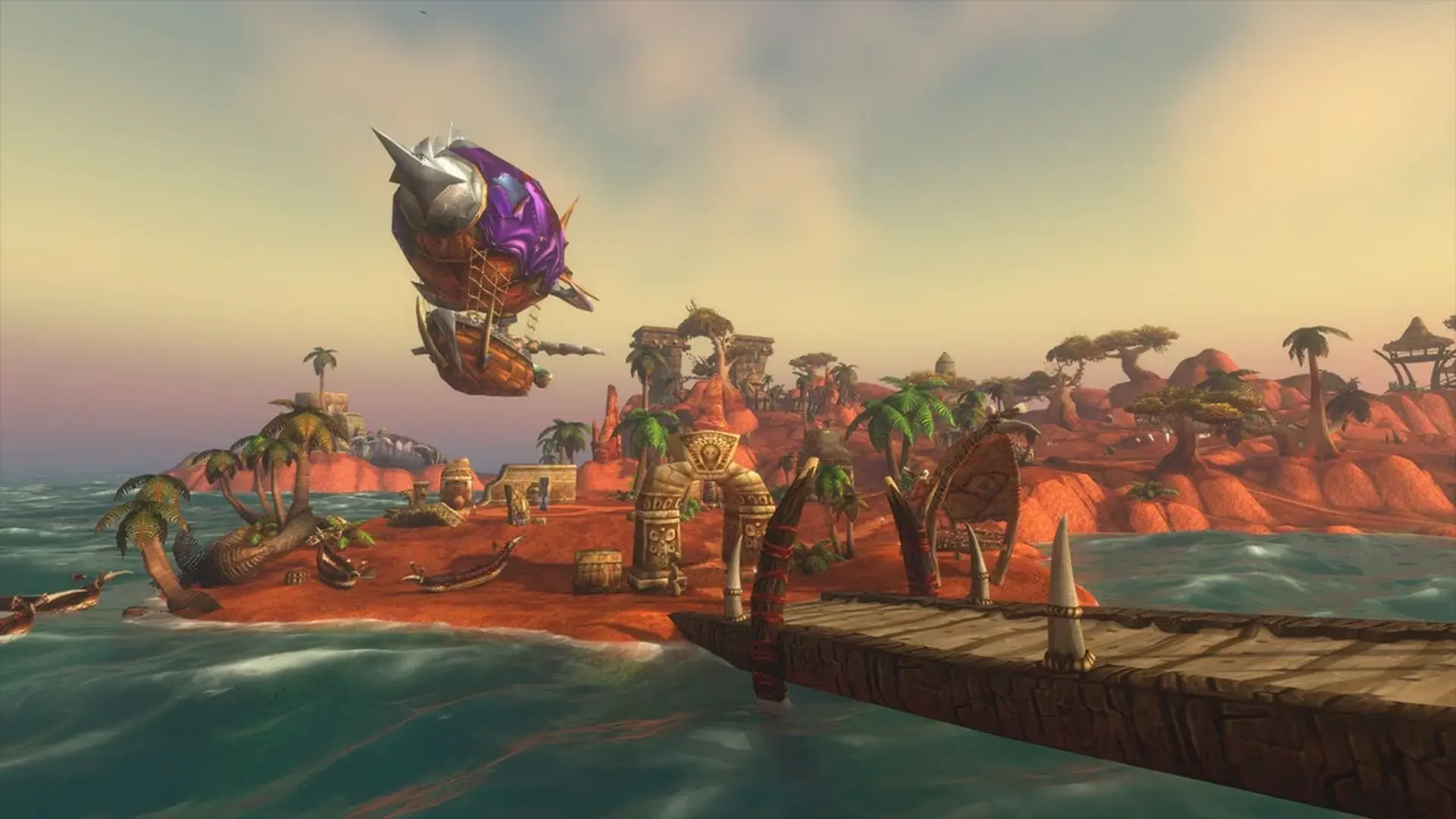
20.5 hours versus 20.4 hours
Here's the number I keep coming back to, and it isn't a marketing number.
On the first WoW Forever podcast, senior game designer Josh Greenfield and lead classic designer Tim Jones said the average player takes 20.5 hours to reach level 20. In Classic, the same trip takes 20.4 hours. Six minutes of difference, across a rebuild of most of the early game.
I have a bad comparison for how that feels, and I'm using it anyway. It's like your mom telling you she didn't touch your room, and then you notice a new houseplant on the desk. The furniture moved. The room's still the room.
Principal designer Kris Zierhut put it plainly to The Sun: "The experience curve remains the same. We did not change the experience curve."
What changed is where the experience comes from. Dungeon mobs award considerably less. Dungeon quests award substantially more, and the first clear pays best. Running the same instance over and over has been gutted on purpose, because Blizzard wants a dungeon to be a stop along the way rather than the conveyor belt that skips it.
That decision landed in a real argument, and I'd rather report it than smooth it over. A forum thread called "Overtuned and Too Fast" drew more than 180 replies from testers who think the game levels too quickly, and at least one wants it slower than Classic ever was. The same week, other testers complained the starting zones were too slow. Both threads described the same build.
The specifics are messy. One tester counted about 20 experience per dungeon mob, low enough that he asked Blizzard to raise it. Another took almost two levels off four dungeon quests in one run, while a dozen ordinary quests had barely moved him from 17 to 18. A third made the point nobody enjoys hearing: we've all gotten better at this than we were in 2005, so familiar routes feel fast even when the clock disagrees.
I lived that from the other direction. When Classic was live, I leveled a character by farming the same instance with the same people until I could've done the pulls asleep. It worked, and it turned leveling into a checklist, until the world stopped being a place and became a route. I quit partly over it. Blizzard is now cutting off the exact shortcut I used.
One caveat. This data covers levels 1 to 20 out of 60. The beta cap started at 20 and rose to 30, and the classes have been reworked, so nobody knows what the back half looks like. I'll take Blizzard's own analytics over forum vibes, and those put Forever slightly slower than Classic Era for the levels it has measured.
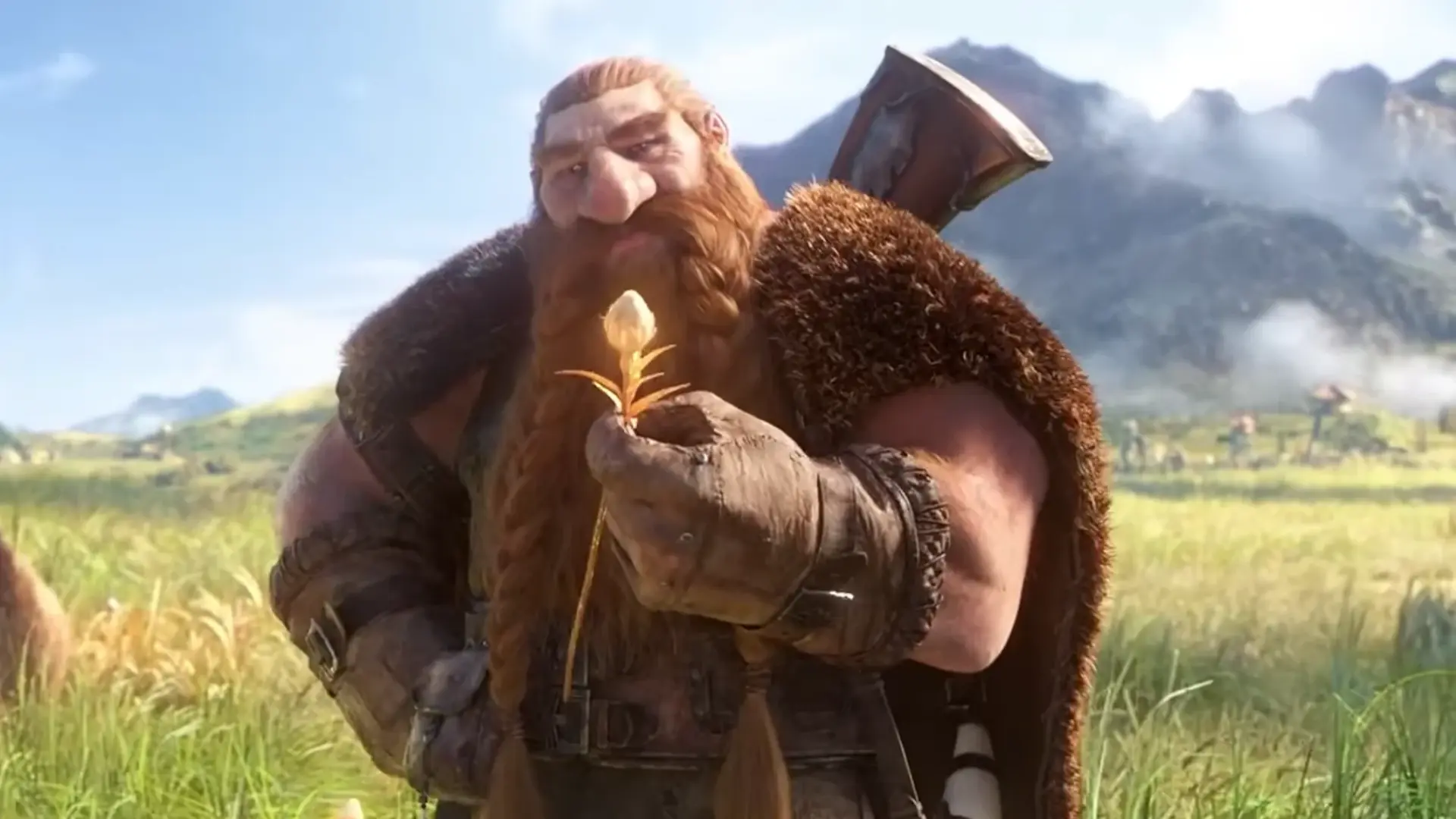
What a 2004 engine looks like in 2026
Digital Foundry ran the new WoW Forever client through its usual tests and called it the largest visual change the series has shipped. The details explain why.
The centerpiece is a custom, probe-based ray traced global illumination system doing real-time diffuse light bounce. It runs on cards with no ray tracing hardware at all. A chapel wall picks up green from the grass around it and red from the roof tiles. Shadowed stone in Stormwind catches the gold of a low sun instead of sitting under one flat blue tint. Indoors it leans on ambient occlusion and older vertex lighting, and looks less dramatic. That's the honest trade.
The restraint is the interesting part. Blizzard didn't remaster every texture with physical materials. It kept the original hand-painted diffuse maps from 2004 and put modern lighting on top, which is why the game still looks like itself. Static distance fog became volumetric fog, so Duskwood hangs heavy and dim the way it never quite managed before. Shadows move with the sun now. Water got waves, shoreline foam, and refraction.
I can't read a frame-time graph by eye, so I'll take Digital Foundry's numbers. On an RTX 4070 laptop, roughly a desktop RTX 4060, they measured 70 to 80 frames per second at 1080p on preset 7 in open zones, with visible drops in crowded capital cities. There's no DLSS and no FSR, so there's no upscaling trick to lean on, only raw silicon and old anti-aliasing.
Players noticed the mood more than the frame rate. One tester said it felt like somebody had taken his memories of 2004 and rebuilt them at high resolution.
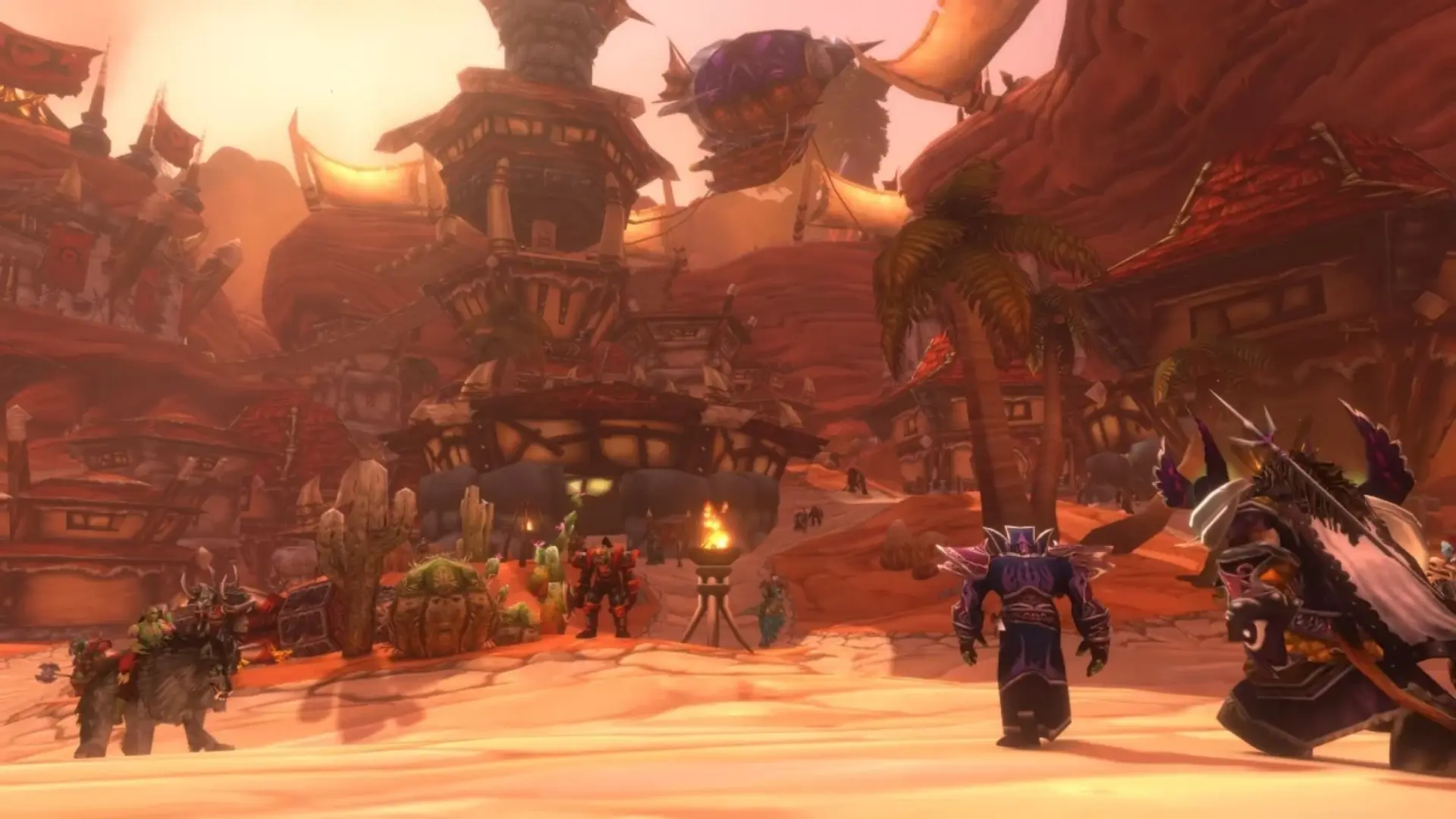
Twenty years of un-learning
The most important thing Armstrong said is also the least quotable. He spent a year relearning how this game was made two decades ago, and he deliberately walked away from the workflow he'd spent eight years mastering on the retail team.
I've read enough "returning to our roots" announcements to be numb to the phrase, so let me be specific. Most of them bolt features onto an old frame and wrap it in nostalgia. What he described is closer to a discipline problem. You give up the fastest tool you own, on purpose, so the constraint keeps shaping the work.
Tim Jones framed the intent with a question from the panel: what would the original team have built in 2005 if they hadn't immediately moved on toward the first expansion? Ion Hazzikostas, the game director, gave the positioning its cleanest sentence to Windows Central: "Forever is designed to be a third pillar alongside Retail and Classic."
The shape of that pillar is public now. The level cap is 60 forever. No expansions, no level scaling, no flying. New content arrives sideways instead: three new or renewed leveling regions, more than 1,000 new quests spread across the whole 1 to 60 climb, and nine new dungeons covering every level range. Raids open December 9 with Barrow Deeps at 10 players, Hyjal Summit at 20, and a refreshed Onyxia's Lair at 40. The new race is the Skyborne, elves who pick a faction at creation, with the Alliance side able to play a mage and the Horde side able to play a shaman.
I'd rather have that than another feature list full of things nobody asked for.
The tester verdict isn't flattering, and I don't think it's meant to be. The common complaint is that it's slow, grindy, and unfriendly to anyone playing alone, and that it takes an active guild or a fixed tank, healer, and damage trio. Testers are describing the product working, not a bug.
To Blizzard's credit, the team has also been candid about the parts that aren't working.
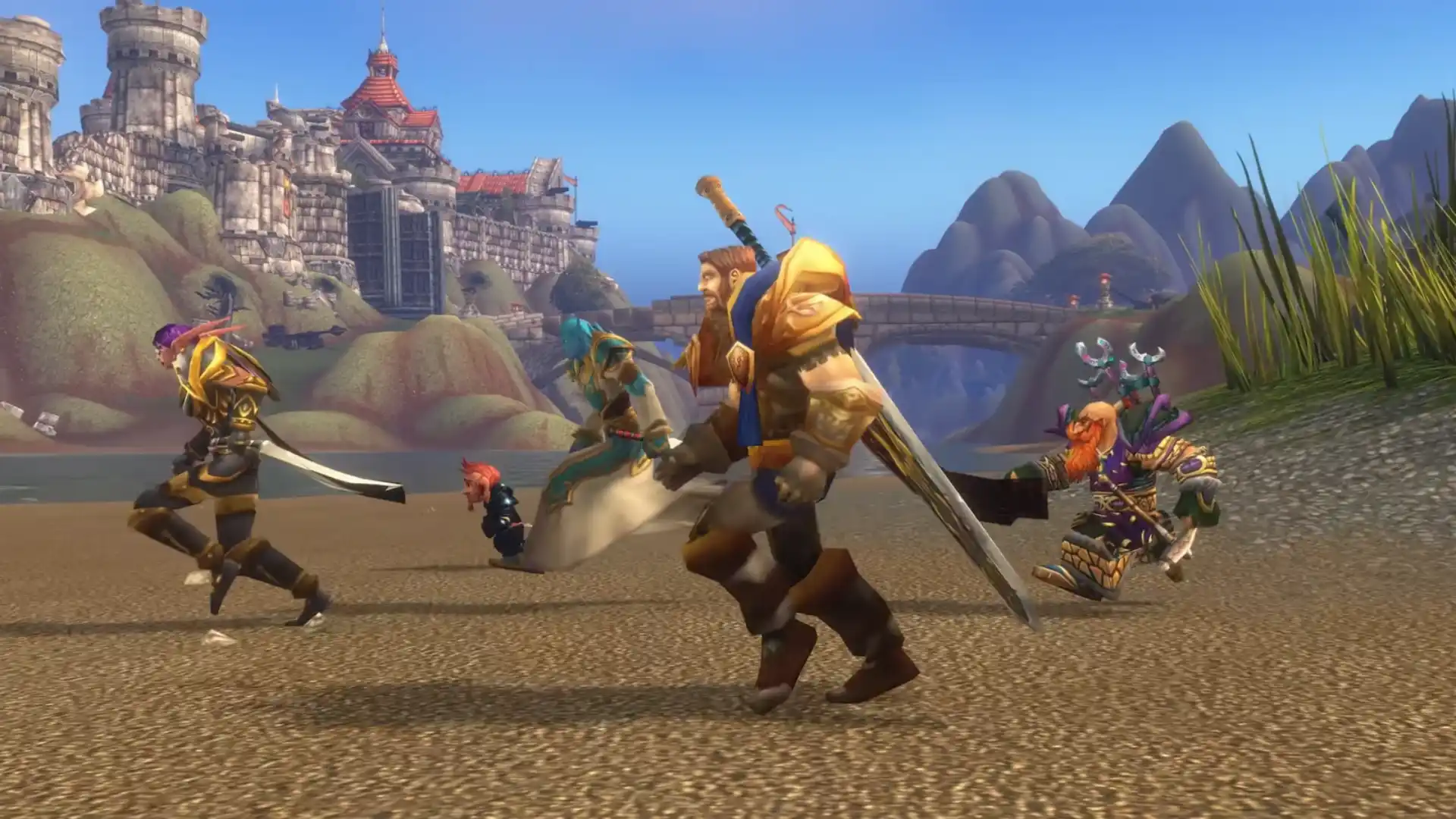
What it costs and when you can play
WoW Forever launches worldwide on November 4 at 3 p.m. PT, and the base version comes with a World of Warcraft subscription or Game Time. You don't need an expansion box.
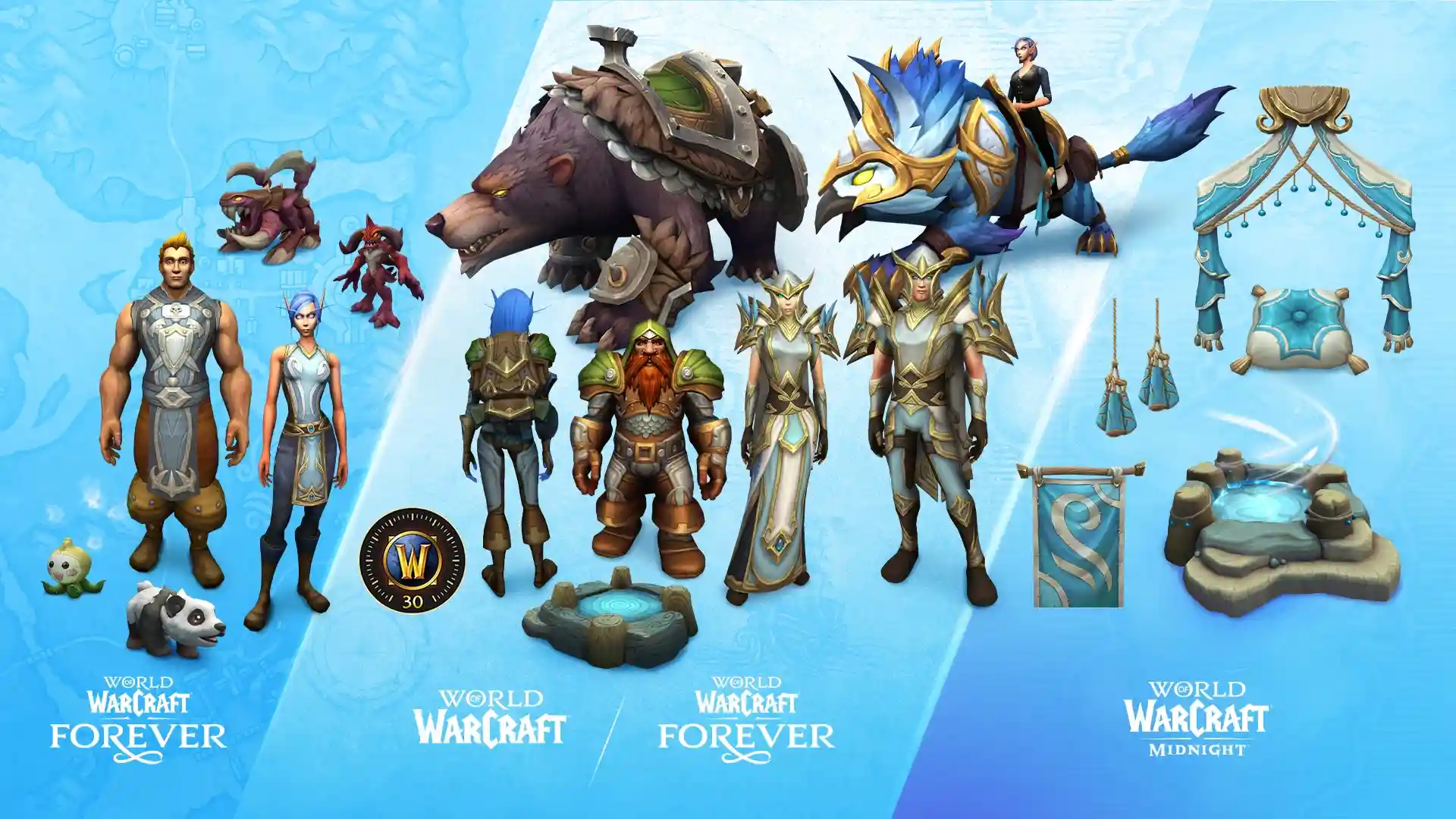
The optional Battle.net packs are where the argument starts. The Skyborne Heroic Pack is $29.99 and includes the new race, the Zephras Isle starting experience, and early name reservation. The Skyborne Epic Pack is $59.99 and adds beta access plus 30 days of game time. The Warcraft Forever Collection is $79.99. The physical Collector's Edition runs about $150.
Here's the friction, stated plainly. Buying nothing still gets you the whole game. Buying nothing also means you can't roll a Skyborne, which quietly closes one of the three launch regions, because Zephras Isle is the Skyborne starting zone from level 1 to 12. Splitting a playable race out of the base box broke a norm the Classic branch has held since 2019, when even full expansion content arrived for the price of a subscription. The thread that followed ran past 700 comments. Part of it was about the principle. Part of it was the shorter verdict: they're just blue elves.
I don't love that, and I'm not going to pretend I do. If I'm spending money here, the Heroic pack is the one I'd think hardest about, because it's the only tier selling game content instead of convenience.
None of this gates anyone who's new. WoW Forever needs no account history, and the Skyborne storyline was written as an entry point. If you've got two hours a night, 20.5 hours puts level 20 at about ten days, and the climb to 60 stays deliberately slow after that.
Hazzikostas gave the fairest answer to the obvious objection in that same interview, and I'll quote it because he concedes the point instead of dodging it. "It means if you log in and want to run a dungeon on your lunch break, you likely can't," he said. "There are inherent trade offs here."
A love letter with an uncertain return address
Armstrong also said he built this for the colleagues who made the original game twenty-odd years ago. That's the line that makes me think he isn't describing a product. He's describing a letter.
Letters need somebody at the other end willing to open them.
The community's worry is easy to find. One player put it this way: launch day will be packed, three months later it'll be quiet, and everyone drifts back to whichever version of the game they came from. That's a fair read. Nostalgia is a great opener and a terrible retention plan, and when the twentieth corpse run stops being funny, something has to be underneath it.
I can't tell you what's underneath it. Nobody can, in September, about a game that ships in November.
But I keep thinking about the thread where players described what the beta felt like. One of them wrote that he's 40 now, and that walking through these places makes him feel 18 again.
Nobody queues 48 minutes to feel efficient. They do it because something they loved is briefly back, and they want to be in the room while it is.
On November 4, Azeroth gets its letter opened. Show up or don't. Either way, somebody spent a year learning the slow, stupid way to write it, and I think that's worth knowing about.